
The 2-Minute Kitchen Reset Routine That Keeps Your Kitchen Clean All Day
📸 Sound familiar? This is exactly what the 2-minute reset routine prevents.
You walk into your kitchen at 7 PM after a long day. There are dishes from this morning still sitting in the sink. The counter has a coffee ring, a half-opened bag of bread, and someone's leftover cereal bowl. The stovetop has grease splatters from last night's dinner.
You look at it. You sigh. And then — you close the lights and go watch Netflix instead.
Sound familiar? Yeah. Me too. Honestly, I used to do this constantly. And the worst part? The mess just kept growing. By the time the weekend hit, I was looking at a full-blown cleaning project instead of a quick tidy-up.
Here's what I finally figured out after years of trying every cleaning system imaginable: the problem isn't laziness. It's strategy.
Most kitchen cleaning advice is built around "big clean" thinking — block out an hour, put on a playlist, scrub everything. But that model fails 90% of the time because real life doesn't give you that hour. Not on a Tuesday at 8 PM.
The 2-minute kitchen reset routine is completely different. It's not about getting your kitchen spotless. It's about keeping it from getting chaotic in the first place. And once you build it into your day? You'll wonder how you ever lived without it.
What Is a 2-Minute Kitchen Reset?
A kitchen reset is not cleaning. Let me be really clear about that because it matters a lot.
Deep cleaning = scrubbing grout, degreasing the oven hood, organizing the pantry. That's important, but it's a weekend activity.
A kitchen reset is a fast, intentional sweep you do throughout the day to keep your kitchen from falling into chaos. Think of it like this: your kitchen is a workspace. Workers don't wait until Friday to clear their desks. They do small tidying moves all day long.
The 2-minute version is specifically designed for:
- People who cook but hate cleaning
- Households where mess builds up faster than one person can manage
- Anyone who's tired of the "Sunday Cleaning Spiral" where you spend 3 hours undoing a week of neglect
Key insight: You're not trying to clean your kitchen in 2 minutes. You're trying to reset it back to baseline — the state it was in before you last used it.

📸 This is what a daily 2-minute reset routine looks like after just one week.
Why Traditional Cleaning Fails (And It's Not Your Fault)
Here's something most cleaning blogs won't tell you: the reason you struggle to keep your kitchen clean has almost nothing to do with discipline or effort. It's psychology.
When we look at a messy kitchen, our brain does a quick cost-benefit analysis. It sees the pile of dishes, the sticky stovetop, the cluttered counter — and it calculates that cleaning this will take a long time and require a lot of effort. So it says: not now.
Behavioral researchers call this "task aversion" — we procrastinate on tasks that feel bigger than they actually are. And the mess-cleaning cycle makes it worse. You avoid cleaning → mess grows → it now actually IS a big task → you avoid it more.
The Motivation Trap
Most people are waiting to "feel motivated" to clean. But motivation follows action, not the other way around. You don't feel like cleaning, so you don't start. You don't start, so you never get the satisfaction of a clean kitchen, which means you never build the motivation. Classic trap.
Energy Drain
After work, after dinner, after parenting — you're running on empty. The last thing your tired brain wants is to stare down a full sink. Traditional cleaning requires sustained energy. A 2-minute reset requires almost none.
The Science Behind Micro Habits
BJ Fogg, a behavior scientist at Stanford, spent decades studying why big habit changes fail and tiny ones stick. His conclusion? The smaller a habit is, the easier it is to actually do it — and doing it builds momentum for more.
James Clear, in his bestselling book Atomic Habits, talks about the idea of "never missing twice" and making habits so small they're almost impossible to skip. A 2-minute reset fits this framework perfectly.
Here's why micro habits work for kitchen cleaning specifically:
- Low activation energy: You're not committing to a big task. You're committing to 120 seconds.
- Immediate reward: You see results instantly, which triggers a dopamine response that makes you want to do it again.
- No willpower required: It becomes automatic after a few weeks — like brushing your teeth.
- Compounding effect: Two minutes, three times a day = 6 minutes of "cleaning" that prevents a 60-minute deep clean.
A University of Minnesota study found that people in cleaner, more orderly environments made healthier food choices and reported lower stress levels. Your kitchen environment literally affects how you feel — and what you eat.
"A clean kitchen isn't a luxury. It's a daily decision made in 120-second increments."
The 2-Minute Kitchen Reset Routine (Step-by-Step)
Okay — here's the actual system. Five steps. Done in about two minutes. Repeat 2–3 times a day (morning, after lunch, after dinner). That's it.
Clear the Counter
Everything that doesn't belong on the counter goes away. That means: put the bread in the cupboard, return the fruit to the bowl, put away the cutting board, toss the packaging.
Real-life example: You made toast this morning. The butter is still out. The knife is on the counter. The empty orange juice bottle is sitting there. Just… put them back. Takes 20 seconds.
💡 Pro TipIf you have things that always end up on the counter (keys, mail, chargers), designate a spot off the counter for them. A small basket nearby works perfectly.
Sink Check
The sink is the heart of your kitchen's visual cleanliness. A clear sink makes the entire kitchen feel cleaner, even if nothing else is done.
Real-life example: There are two mugs and a bowl in the sink from breakfast. Rinse them and put them in the dishwasher (or on the drying rack). Don't wash everything — just don't let dishes sit in water.
💡 Pro TipThe rule is: never leave the kitchen without the sink being clear. Even if everything else is messy, an empty sink creates the feeling of order.
Quick Wipe-Down
Grab a damp cloth or paper towel and do a single swipe across the main counter surface and the stovetop. You're not scrubbing — you're catching crumbs, spills, and residue before they harden.
Real-life example: You cooked pasta last night and there are a few tomato sauce splashes on the stove. Fresh splashes take 3 seconds to wipe. Hardened splashes from 3 days ago take 3 minutes to scrub. Do the math.
💡 Pro TipKeep a spray bottle with diluted dish soap and a dedicated counter cloth right on the counter. The fewer steps between you and cleaning, the more likely you are to do it.
Put Things Back
This is the most overlooked step and the biggest culprit behind kitchen chaos. Items that don't live in the kitchen slowly migrate there — and stay forever. Return them.
Real-life example: The scissors that came out to open a package. The kids' homework that somehow ended up next to the toaster. The phone charger that's been "just sitting there" for six days. Return them to their homes.
💡 Pro TipCreate a "return basket" — a small tray or bowl near the kitchen exit. Things that don't belong in the kitchen go in there and get redistributed during your next trip out of the room.
Optional: 10-Second Floor Check
Just look at the floor. Is there anything obviously on it that shouldn't be? A piece of food, a dropped spoon, a dish towel? Pick it up. You're not mopping — just preventing crumb accumulation.
Real-life example: There are cornflake crumbs from this morning right under the breakfast stool. Grab a paper towel, wipe them up. Ten seconds.
💡 Pro TipA hand broom and dustpan stored visibly near the kitchen means you'll actually use it. Hidden in the closet = forgotten forever.

📸 Step 3 of the reset: one quick wipe keeps your counter clean all day.
5 Mistakes That Destroy Your Kitchen Cleanliness
Even with the best routine, there are a handful of habits that'll quietly undo everything. Here are the ones I see most:
Mistake #1: Over-Cleaning in Bursts
Spending three hours cleaning on Sunday and then doing nothing all week creates a cycle of feast and famine. The kitchen looks great for 12 hours, then slowly collapses again. Consistency beats intensity every single time.
Mistake #2: Skipping the Night Reset
If there's one reset you absolutely cannot skip, it's the one before bed. Waking up to a clean kitchen sets the tone for the entire day. Waking up to a disaster? You've already started the morning behind. The night reset is non-negotiable. Seriously.
Mistake #3: Waiting for Motivation
You will not feel like doing it. That's the whole point. The reset should be as automatic as turning off the lights when you leave a room. Motivation is irrelevant. Routine is everything.
Mistake #4: Using Too Many Dishes
If you're cooking one meal but dirtying seven dishes, no cleaning system will save you. Simplify your cooking process. Use one cutting board. Reuse a bowl. The best way to have a clean kitchen is to create less mess in the first place.
Mistake #5: Ignoring the "Just One Thing" Mindset
People either clean everything or nothing. Leaving "just one more thing" — one pot, one glass, one crumb pile — gives permission for more to accumulate. Small mess is the seed of big mess. Catch it early.
Real talk: The night reset is the one habit that, if I skip it even twice in a row, my entire kitchen system falls apart within 48 hours. Don't skip it.
2-Minute Reset vs. Deep Cleaning: What's the Difference?
Both have their place. Here's how they compare:
| Factor | 2-Min Reset Routine | Deep Cleaning |
|---|---|---|
| Time Required | 2–3 minutes | 60–120 minutes |
| Frequency | 2–3× daily | Weekly or monthly |
| Energy Required | Very low | High |
| Sustainability | Easy long-term | Easy to skip |
| Results | Prevents chaos, maintains baseline | Removes deep grime, sanitizes |
| Mindset Required | Autopilot | Planning + motivation |
| Ideal For | Daily kitchen health | Periodic maintenance |
Bottom line: you need both, but the reset routine is what makes deep cleaning easier and less frequent. When you reset daily, your deep cleans take half the time.
When to Use This Routine (Daily Timing Guide)
After breakfast. Before you leave the kitchen. Takes 90 seconds. Sets you up to come home to a clean space.
After lunch (if you're home). Optional but helpful. Keeps the afternoon clean-slate feeling alive.
The most important one. After dinner, before you sit down to relax. Waking up to a clean kitchen is a game-changer.
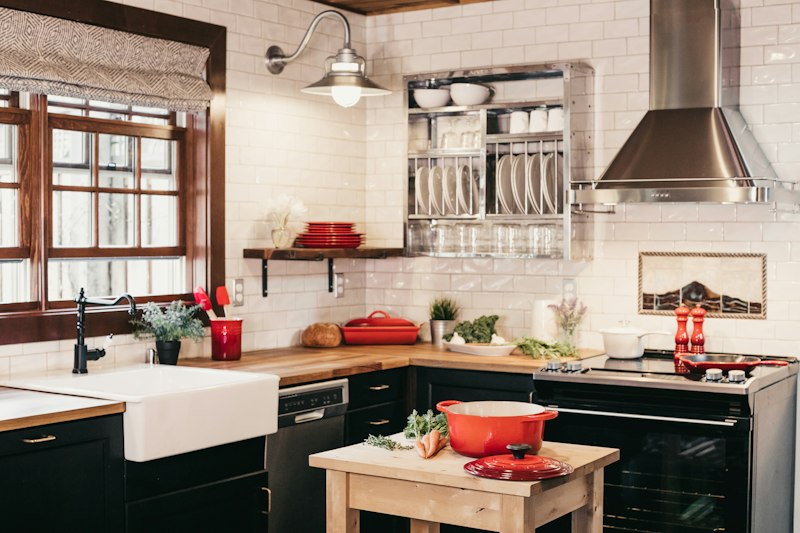
📸 This is what your kitchen can look like every single morning — after just one night reset.
Who Should Use This System?
Honestly? Almost everyone. But here are the people who will benefit the absolute most:
No time for big cleaning sessions. This fits into the gaps between work and sleep.
Clutter shows faster in small kitchens. Short resets keep small spaces feeling open.
If traditional cleaning feels like a punishment, 2 minutes will change everything.
Just starting to build home habits? This is the single best kitchen habit to start with.
📸 You need exactly these tools. That's it. No fancy equipment required.
Frequently Asked Questions
Yes — but with an important clarification. Two minutes, done 2–3 times a day, equals 4–6 minutes of daily maintenance. That's enough to prevent mess from building up. It won't replace deep cleaning, but it means your kitchen rarely needs deep cleaning because it never gets truly dirty. Most people who stick to this for two weeks report their kitchen feels consistently clean for the first time in years.
Almost immediately. After one day of doing morning and night resets, you'll notice a difference. After a week, it starts feeling effortless. After 21 days (roughly the habit formation window), it's automatic. The physical results are instant — the habit-building takes a few weeks.
Do one big reset first — just this once. Spend 20–30 minutes bringing the kitchen back to a clean baseline. Then, from that clean point, start the 2-minute routine. Trying to implement a maintenance system on top of chaos doesn't work. Get to zero, then maintain.
Occasional skips are fine — life happens. The key is never skipping two days in a row. One missed reset = small mess. Two missed resets = mess that's starting to pile. Three missed resets = you're back to square one. If you have to skip one, skip the midday one.
They're different tools for different jobs. Deep cleaning handles things the reset routine can't — like cleaning inside appliances or scrubbing tile grout. But the reset routine is what makes your kitchen livable on a daily basis. Most people who do this consistently find they only need a true deep clean once or twice a month instead of weekly.
The best approach is to start solo and let the results speak. When your partner or kids see the kitchen consistently cleaner, they often naturally start contributing. You can also turn the reset into a household 2-minute "closing" ritual after dinner — frame it as a family wind-down, not a chore assignment.
Not at all. A damp cloth, a dish sponge, and a spray bottle with diluted dish soap is all you need. The only "tool" investment worth making is having these within arm's reach in the kitchen, not buried under the sink. Accessibility is everything when you only have 2 minutes.
📚 Related Articles You'll Love
References & Authority Sources
BJ Fogg, PhD — Behavior Design Lab, Stanford University. Research on tiny habits and behavior change.
James Clear — Atomic Habits (Avery, 2018). Frameworks for building sustainable daily habits.
University of Minnesota — Study on physical environment, food choice, and stress response (Psychological Science).
The Bottom Line
Here's the truth: a clean kitchen isn't about having more time or more willpower. It's about having a smarter system that works with your real life — not against it.
The 2-minute kitchen reset routine is genuinely one of the simplest, highest-impact habits I've ever added to my day. Not because it's revolutionary. But because it's doable. Every single day. Even on the bad ones.
You don't need to become a cleaning enthusiast. You don't need to reorganize your entire kitchen. You just need two minutes, twice a day, done consistently.
Clear the counter. Check the sink. Quick wipe. Put things back. Glance at the floor. Done.
That's it. That's the whole system. And honestly? It works better than anything else I've tried.
Ready to Try It Tonight?
Start with just the night reset after dinner. Clear the counter, empty the sink, do a quick wipe. That's your entire homework. Do it tonight, and notice how different your morning feels tomorrow.
✓ Start Your 2-Minute Reset Tonight
Comments
Post a Comment